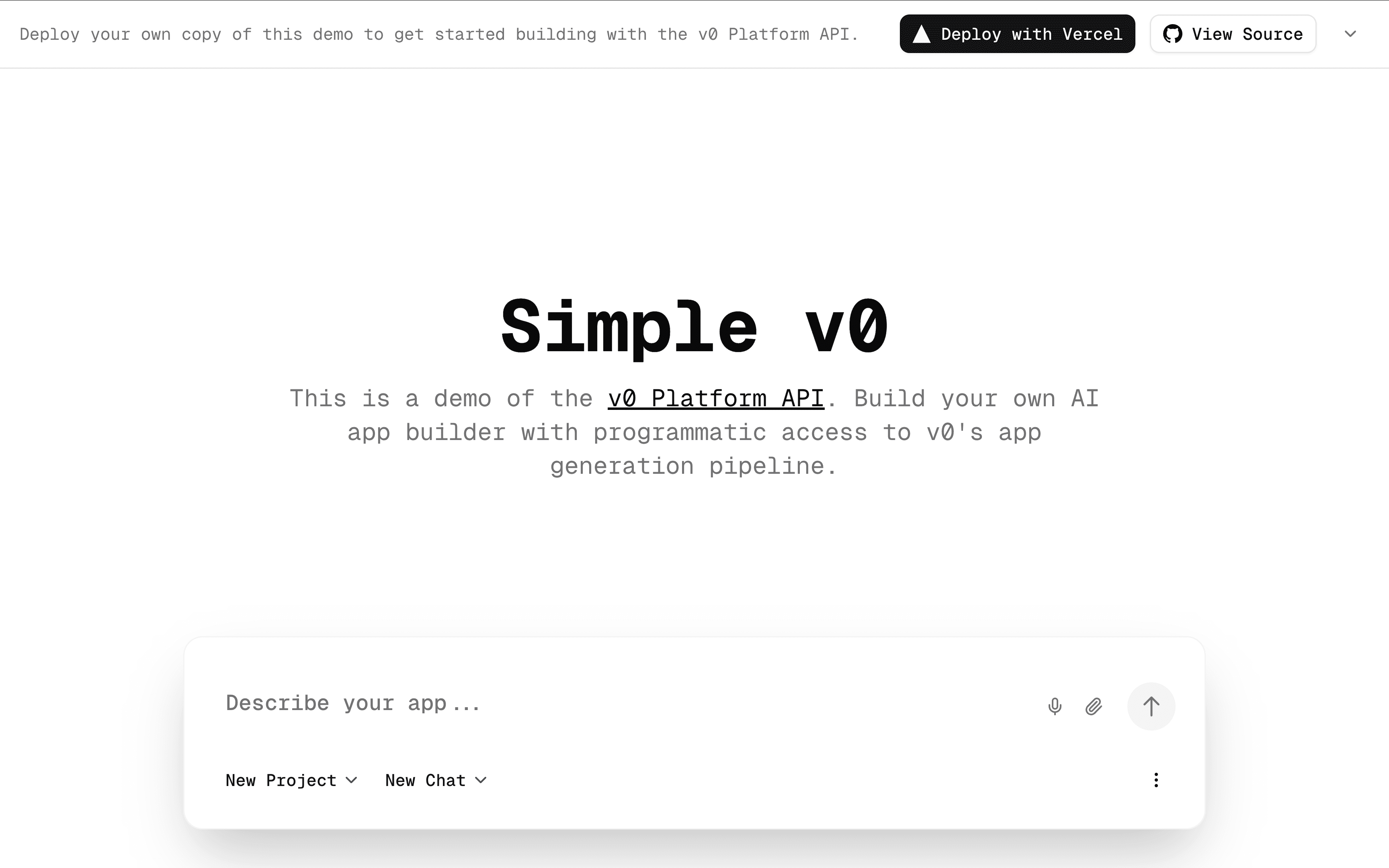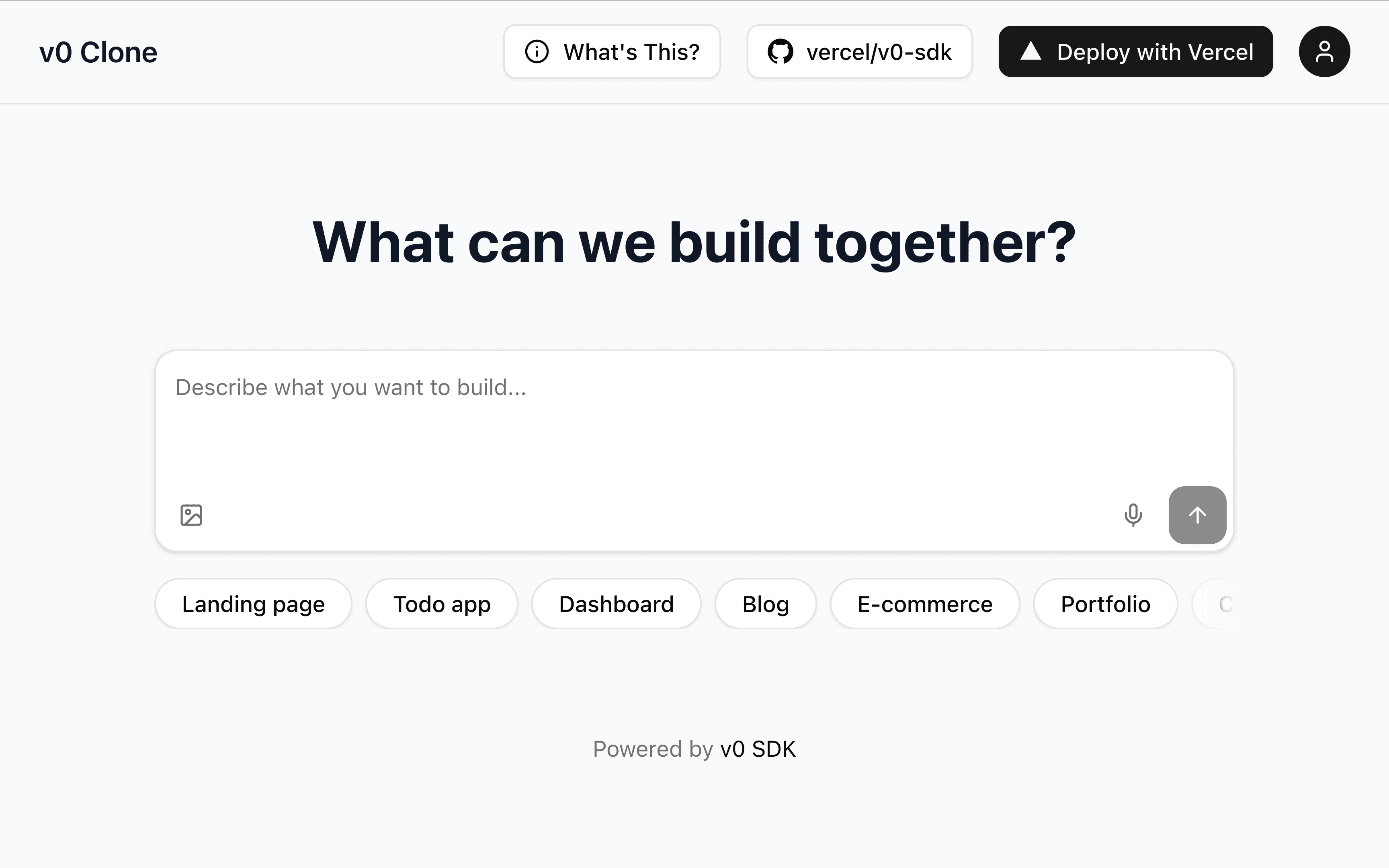
v0 Clone
A deliberately small v0-style chat app built with the v0 SDK.
Architecture
This example is a monorepo with two independently deployable Next.js apps:
apps/webis the host application. It owns chat UI, server routes, and the preview iframe.apps/preview-proxyis a dedicated preview origin. It fetches preview credentials on the server, proxies preview traffic, and contains no host-app sessions or unrelated application routes.
Generated previews are untrusted code. Do not deploy the preview proxy on the
host application's origin. For strong production isolation, do not use a
same-site subdomain either: prefer origins on different registrable domains,
such as app.example.com and example-preview.net, rather than
app.example.com and previews.example.com.
The iframe keeps allow-scripts and allow-same-origin so generated React apps
can hydrate and run normally. The dedicated proxy origin is what prevents those
permissions from giving preview code access to the host app.
Run it
Copy the example environment file and add your API key:
Then run from the repository root:
The one dev command starts both apps:
- Web app: http://localhost:3000
- Preview proxy: http://localhost:3001
When this example is created with create-v0-sdk, run the same commands from
the generated project directory:
Deploy it
Create two projects from the same repository:
- Deploy
apps/webas the host application. - Deploy
apps/preview-proxyon a different registrable domain with deployment protection disabled or otherwise configured to allow iframe navigations. - Set
V0_API_KEYon both projects. - Set
NEXT_PUBLIC_V0_PREVIEW_PROXY_URLon the web project to the proxy project's public origin. - Set
V0_CLONE_ORIGINon the proxy project to the web project's exact public origin. The proxy uses it for loading-state messages. - Configure the preview proxy's hostname as a trusted preview host in v0.
The preview proxy must not share authentication cookies or application
endpoints with the host app. fetchPreview strips incoming credentials and
infrastructure headers before forwarding requests.
Trust the preview proxy hostname
Add the isolated preview proxy's hostname to your team's trusted preview hosts. Use the hostname only, without a scheme, port, or path. Do not use the web application's hostname.
From the generated project's root, the following command reads V0_API_KEY
from .env.local:
Replace preview.example-preview.com with the proxy's production hostname.
This endpoint replaces the complete trusted-host list, so include any existing
hostnames that should remain trusted.
Implementation notes
- The root layout fetches favorite and recent chats on the server.
/chats/[chatId]fetches the selected chat and its messages on the server.- Client chat state uses AI SDK
useChatwithV0Transport, while@v0-sdk/react/swrhooks power chat, file, task-resolution, restore, duplicate, download, and deployment actions. - App Router handlers call the v0 SDK on the server, so
V0_API_KEYis never included in the client bundle. - New chats can start from a prompt, selected files, a ZIP archive, or a GitHub repository.
- Assistant messages render text, reasoning, activities, and task-resolution controls from the SDK's ordered message parts.
- The web app points its iframe at the dedicated proxy origin. The proxy uses
fetchPreview, and itsproxy.tskeeps root-relative preview requests on the chat-specific proxy path.
There is no local demo data store; chats and files come from the v0 API.